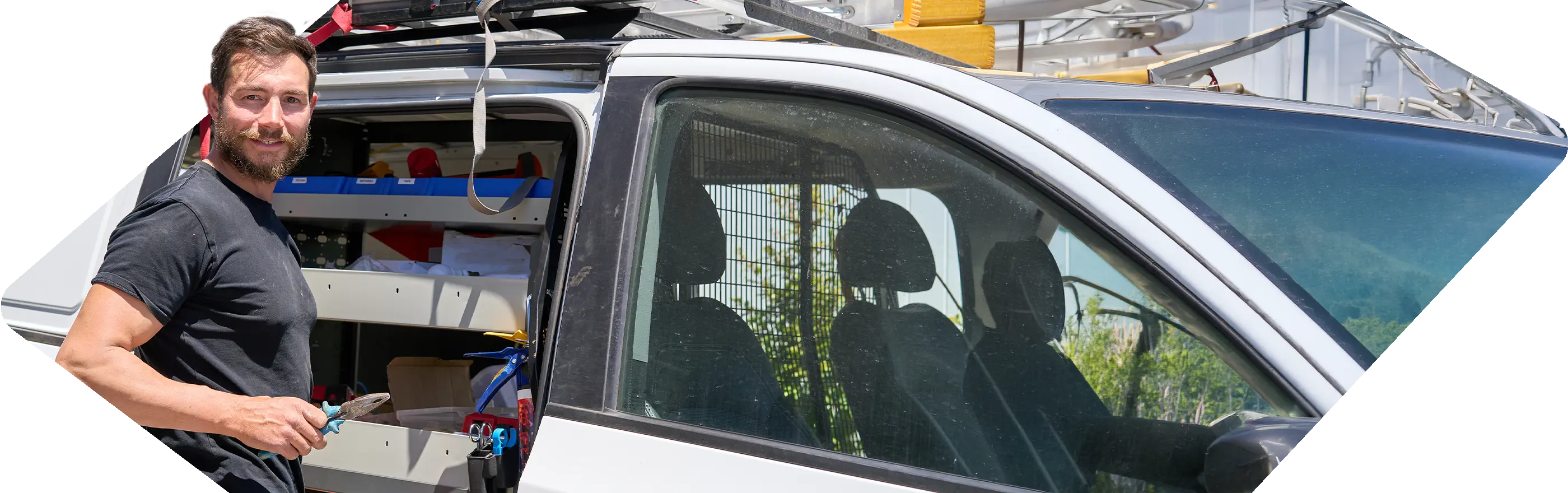
Do you need commercial auto insurance? (Guide for contractors and freelancers)
You might assume commercial auto insurance is only for massive trucking fleets, but it is actually a vital safety net for a wide range of everyday professionals, from freelancers to independent contractors. If you use your vehicle to perform your job, a standard personal car insurance policy often won't cover accidents that happen while you are on the clock. Essentially, if your car, truck, or van is part of how you earn your living, this coverage helps ensure that a fender bender on the job doesn't leave you paying out of pocket for damages or medical bills. Read on to see how this coverage works and why a policy with AssuranceAmerica might be the right move for you.
 9 min read
Who needs commercial auto insurance?
Generally, Commercial Auto insurance is for small business owners who rely on their vehicles to get the job done. This program is specifically built for smaller operations running anywhere from 1 to 9 vehicles.
You’ll likely need this coverage if:
- You own the business. It doesn't matter if you are a sole proprietor, part of a partnership, or running a corporation—you are eligible.
- You drive "work" vehicles. This includes pickup trucks, vans, and box trucks, but also regular cars and SUVs if you use them primarily for business.
- You tow equipment. If you use trailers to haul tools, goods, or even mobile concession stands, this policy can cover them.
- Your vehicle is too big for a personal policy. Personal car insurance usually won't cover vehicles that weigh over a certain amount. This program covers vehicles up to 16,000 lbs, taking care of heavier-duty rides like dump trucks or large box trucks that personal plans exclude.

Which businesses and jobs require commercial auto insurance?
You might be surprised by how many different types of businesses need commercial auto insurance. It isn’t just for long-haul truckers; AssuranceAmerica actually covers over 1,000 different occupations.
Here’s a look at the main groups of business and professions who usually need this coverage:
1. Review your policy details annually
This is one of the most common groups. If you travel to different job sites to build, install, or fix things, you fall into this category. This includes:
- General contractors & builders: Business owners who manage construction projects.
- Skilled trades: Electricians, plumbers, carpenters, and repair professionals (often called "Special Contractors") who haul their tools and drive to customers' homes or businesses to do the work.
- Farming: This covers farmers who need to transport their own livestock or crops to market.
2. Landscaping and outdoor services:
If your business keeps the outdoors looking good, you likely need commercial coverage for your trucks and trailers. This covers:
- Lawn & garden: Crews that mow lawns or handle landscaping for homes and offices.
- Seasonal work: This includes businesses that shift gears to handle snowplowing or firewood delivery during the colder months.
3. Service providers, delivery and retail:
If your business is mobile, your insurance should be too.
- General services: This is a broad category that covers almost any business owner who hits the road to visit a client or make a supply run—think of it as coverage for the "doers" who bring their services directly to the customer.
- Retailers: This is for the shop owners who don't just sit behind a counter. If you run a florist shop, a furniture store, or an appliance business and use a vehicle to pick up inventory or drop off goods to your customers, you fit right in here.
- Restaurants & caterers: If you are transporting food, you need protection. This covers caterers heading to an event or restaurants that handle their own deliveries. The main rule here is that it covers routine deliveries, not high-pressure, time-sensitive runs like on-demand pizza delivery.
- Food trucks: The "kitchen on wheels" crowd is covered, too. This includes traditional food trucks as well as mobile concession trailers that you tow to festivals or job sites.
Who commercial auto insurance doesn't cover
To figure out if this coverage is the right fit, it helps to know which jobs are typically considered "too risky" for a standard small business policy. Generally, if your work involves high-pressure driving, transporting people for cash, or massive heavy-duty hauling, you will likely need a more specialized policy rather than this standard program.
Here are the main categories that are usually excluded:
- Rideshare/taxi services: If you are driving for Uber, Lyft, or a taxi company, you are typically excluded because you are transporting passengers for a fee. This falls under "for-hire" transportation, which generally requires its own specific type of insurance rather than a standard commercial auto policy.
- Time-sensitive delivery: While regular delivery (like dropping off flowers or furniture) is fine, "rush" delivery is not. If your job involves racing against the clock—like pizza delivery or medical couriers with strict deadlines—standard commercial policies usually won't cover you.
- Heavy haulers: This insurance is generally built for vehicles under 16,000 lbs (about the size of a medium box truck). It is not designed for massive tractor-trailers (semis) or businesses hauling dangerous items like hazardous materials, logs, coal, or steel.
Don't wait to get a real quote, fast.
Key differences between personal vs. commercial auto insurance
While both commercial and personal auto insurance are designed to protect your vehicle, the biggest difference comes down to exactly what the vehicle is doing at the time.
Think of personal insurance as coverage for your daily life—like commuting to the office or running to the grocery store. Commercial insurance, on the other hand, is built for when you are actually using the vehicle to do your work, such as hauling tools, making deliveries, or visiting job sites.
Because business driving comes with unique risks, a personal policy generally won't cover accidents that happen while you are on the clock. Commercial policies are written specifically to fill that gap, often providing higher liability limits to ensure your business assets are properly protected.
You can read more about the biggest differences in our guide: Commercial Auto Insurance for Small Business Owners: What You Need to Know.
Here is a simple summary to compare personal auto vs. commercial auto insurance:
| Feature | Personal auto insurance | Commercial auto insurance |
|---|---|---|
| FeaturePrimary Use | Personal auto insuranceCommuting, errands, family trips. | Commercial auto insuranceBusiness operations, deliveries, trade work. |
| FeatureWho Drives | Personal auto insuranceYou and your family. | Commercial auto insuranceYou and your employees. |
| FeatureVehicle Types | Personal auto insuranceStandard cars, pickups, SUVs. | Commercial auto insuranceIncludes Box trucks, Dump trucks, large vans (up to 16,000 lbs). |
| FeatureOwnership | Personal auto insuranceIndividuals. | Commercial auto insuranceCorporations, Partnerships, Sole Proprietors. |
| FeatureEquipment | Personal auto insuranceFactory parts only. | Commercial auto insuranceCan cover attached ladders, toolboxes, and racks. |
The dangers of relying on a personal auto policy
Relying on a personal auto policy for your small business can leave you exposed to financial risks that personal plans simply aren't built to handle.
Here is what you might miss out on—or risk losing—if you try to make a personal policy do a commercial policy’s job:
1. Your work vehicle might not qualify for personal coverage.
Personal insurance is meant for standard commuting cars, not heavy-duty workhorses. If you drive a vehicle that is heavy (up to 16,000 lbs) or has a specific body type like a dump truck, step van, or large box truck, a personal insurer will likely refuse to cover it. Commercial insurance is specifically required to cover these heavier, specialized vehicles that personal plans exclude.
2. Your employees likely won't be covered.
Personal policies are generally designed to cover you and your resident family members—not a rotating crew of employees. Small businesses need the flexibility to cover the whole team, including employees and even foreign drivers. Commercial policies are designed to solve this by allowing employees to be listed drivers and covering multiple vehicles—up to 9 in this specific program—on a single plan.
3. Your expensive custom equipment is at risk.
When you buy a personal policy, the insurance company agrees to fix the car as it came from the factory. They generally won't pay for the thousands of dollars in ladder racks, toolboxes, or machinery you added to it. Commercial policies allow you to specifically cover this "permanently attached equipment" so you are reimbursed for the full value of your work truck, upgrades and all.
4. You are exposed when employees drive their own cars.
Business owners often send employees on errands in the employee's own car, like picking up lunch or supplies. If they cause an accident while on that business run, your company can be sued, and a personal policy won't cover that liability. Commercial insurance offers specific "Employer Non-Owned Auto" coverage to protect your business assets when employees use their personal vehicles for work tasks.
5. You miss out on "downtime" protection.
If a personal car is in the shop, it is an inconvenience; if a business vehicle is in the shop, you lose revenue. Small businesses can't afford vehicle downtime. Commercial policies understand this reality and offer options like rental reimbursement to help pay for a temporary work vehicle, ensuring you can keep operating while yours is being repaired.
What this means for independent contractors and freelance workers
If you use your vehicle to earn a living, sticking with a personal policy could leave your business vulnerable to risks it wasn't built to handle. Commercial auto insurance is designed specifically for independent contractors and freelancers, offering higher liability limits and protection for the unique challenges you face on the job. Whether you need to cover employees or specialized work trucks, AssuranceAmerica makes it easy to find the right coverage for your business. It only takes a few minutes to explore your coverage options and get a quote, so you can focus on your work with peace of mind.
FAQs
Any business that uses vehicles as part of its daily operations needs commercial auto insurance. This includes contractors, delivery services, landscapers, plumbers, caterers, and real estate agents. If a vehicle is driven for business purposes — hauling equipment, transporting clients, or making deliveries — AssuranceAmerica's commercial auto insurance provides the liability and property damage protection that personal auto policies simply won't cover.
Personal auto insurance is designed for everyday commuting and personal use, while commercial auto insurance covers vehicles used for business activities. If you're involved in an accident while driving for work and only carry a personal policy, your claim could be denied. AssuranceAmerica's commercial auto insurance fills that gap, protecting business owners, employees, and company-owned vehicles from costly financial losses.
Self-employed individuals who use their vehicle to conduct business — such as freelancers, independent contractors, and gig workers — may need commercial auto insurance. A personal policy typically excludes coverage for business-related driving. AssuranceAmerica's commercial auto insurance ensures self-employed professionals stay protected on the road, covering liability, vehicle damage, and medical expenses that arise during work-related travel.
When employees use personal vehicles for work-related tasks, your business can still be held liable in the event of an accident. Hired and non-owned auto coverage, available through AssuranceAmerica's commercial auto insurance policies, protects your business from that exposure. Relying solely on an employee's personal insurance leaves your company vulnerable to significant legal and financial risk.
Operating a business vehicle without commercial auto insurance exposes business owners to serious financial and legal consequences. Without proper coverage, your business could be responsible for paying medical bills, vehicle repairs, and legal fees out of pocket following an accident. AssuranceAmerica's commercial auto insurance safeguards your business assets, ensures regulatory compliance, and provides peace of mind every time your team hits the road.